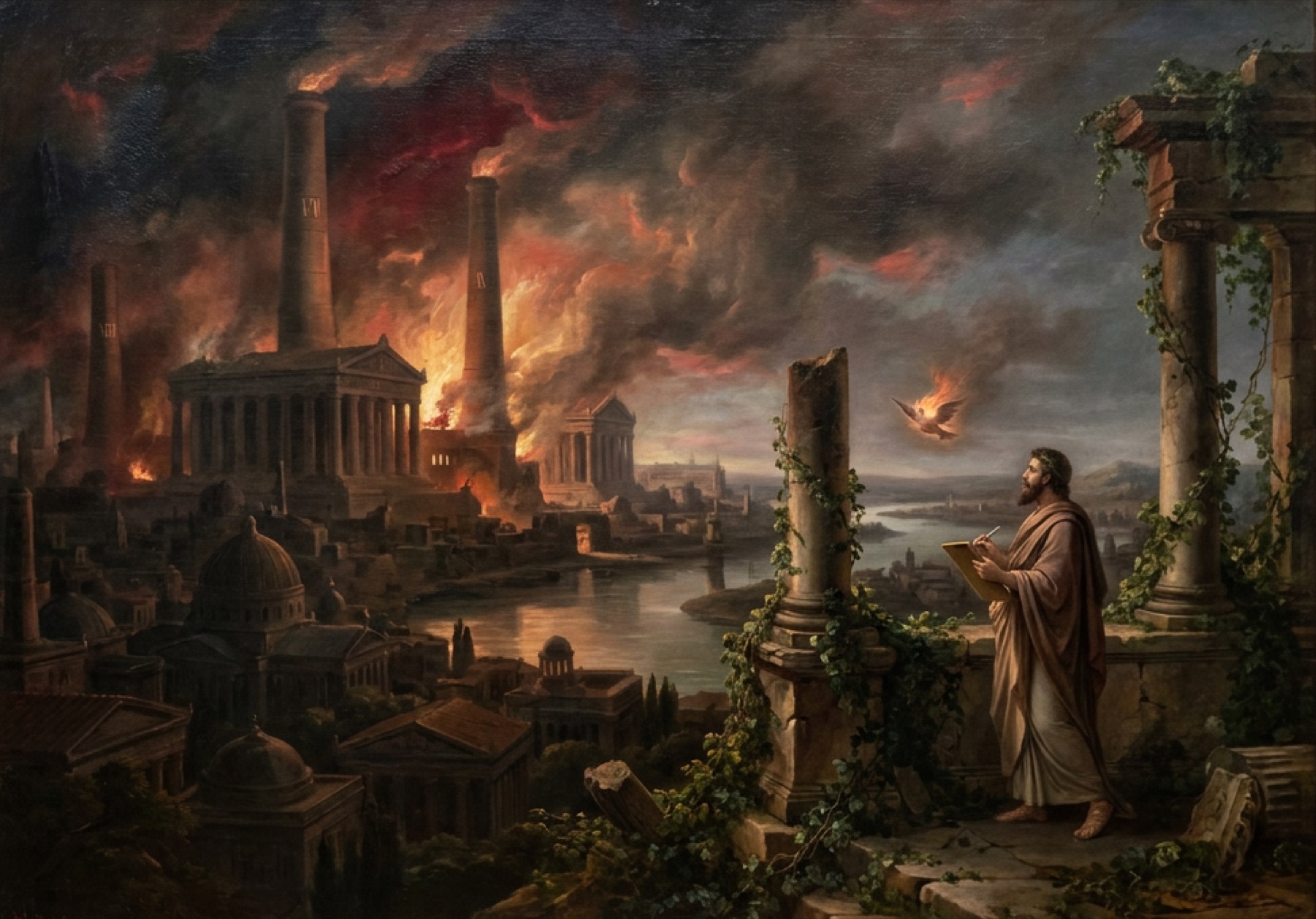
Tab. IIndutiae in flammis. Tabula Actis Mundi more veterum picta (a machina).A Ceasefire in Flames. Painted for Acta Mundi in the classical manner (AI-generated).
Annales Nostri Temporis · De foedere vanoAnnals of Our Time · On an Empty Treaty
Indutiae verbis decretae, igne peractae
A Ceasefire Decreed in Words, Enacted in Fire
Donaldus Trump indutias energiae inter Russiam et Ucrainam ex improviso edixit; at Moscovia tacet, Kiovia obscuratur, et socii inter simulationem et obsequium haerent.
Donald Trump abruptly proclaims an energy ceasefire between Russia and Ukraine; yet Moscow keeps silence, Kyiv is plunged into darkness, and allies hesitate between simulation and servility.
Cur hoc legimusWhy we read this Quia ficta pax edicto promulgatur dum provinciae flammis et ferro vastantur.Because a fictitious peace is proclaimed by decree while provinces are still laid waste by fire and iron.
Anno urbis conditae MMDCCLXXIX, die Lunae, ante diem IV Idus Octobres. Donaldus Trump, praeses Americanorum, nova simulatione pacem orbi terrarum mandavit. Mane diei hesterni, ut Euronews et acta transmarina referunt, per epistulam palam missam edixit inter Ucrainam et Russiam indutias energiae statim valere: consensisse ambas partes, ne quis foedus violaret. Verba imperiosa, qualia olim reges Orientis pro tribunali iactabant. At Moscoviae altum silentium erat; Kioviae autem stupor et caedes.
In the year 2779 from the founding of the city, Monday, the fourth day before the Ides of October. Donald Trump, president of the Americans, enjoined peace upon the world under a fresh pretense. Yesterday morning, as Euronews and overseas dispatches report, he declared by a public broadcast that an energy ceasefire between Ukraine and Russia was effective immediately: both parties had agreed; let no one violate the pact. These were imperious words, such as the despots of the East once hurled from their tribunals. Yet in Moscow there was profound silence; in Kyiv, only astonishment and slaughter.
Neque enim ignota erant arcana consilii. Bellum in Irania recens conflatum olei inopiam et pretiorum caritatem intulerat; instabant comitia media, ubi civium suffragia ob caritatem annonae trepidabant. Duobus ante diebus idem princeps commercium gasolei cum Russis laxari iusserat, ut pretia domi deprimeret. Id vulgo indignabantur socii; septem quoque senatores Washingtoniae, quorum quattuor e partibus ipsius erant, foedus illicitum damnaverant; Marcus Carney, primus minister Canadensis, aperte monuerat eam pactionem paci Europae repugnare. Remedium ergo tumultui quaesitum: indutias fingere, ut commercium honestaretur.
Nor were the hidden motives of the policy obscure. The war recently ignited in Iran had caused oil shortages and sharp price spikes; midterm elections were at hand, where the votes of citizens wavered under the rising cost of daily grain. Two days earlier, the same ruler had decreed an easing of the trade in diesel fuel with Russia to suppress prices at home. This the allies openly resented; seven senators in Washington as well, four of them from his own faction, denounced the agreement as unlawful; Mark Carney, prime minister of Canada, warned plainly that this arrangement stood in direct opposition to peace in Europe. A cure for the uproar was therefore sought: to feign a truce, that commerce might be justified.
Sed dum verba per auras volant, ferrum terram petit. Volodymyrus Zelenskyj vix mirari desierat, cum stationes electricae Kioviae et Charcoviae missilibus ictae conruerunt. Urbibus luce et calore privatis, praeses Ucrainae nuntiavit totum diem caelum infestum fuisse fucis volantibus quos 'shahed' vocant, ex Perside oriundis. Hostis scilicet, quem consensisse Trump gloriabatur, ictibus potius quam legatis responderat. Nullo pacto constiterant arma; sonus tantum vocis mutatus erat.
Yet while words flew through the air, iron sought the earth. Volodymyr Zelenskyy had scarcely ceased to marvel when power plants in Kyiv and Kharkiv collapsed under missile strikes. With the cities deprived of light and warmth, the president of Ukraine reported that the skies all day had been infested with the winged drones called 'shaheds', designed in Persia. The enemy, whom Trump boasted had agreed, answered with strikes rather than envoys. Weapons had not halted in any way; only the sound of a voice had changed.
Accedebat contumelia in socios. Rogatus de reprehensionibus pridie eius diei, Trump palam edixerat tempus esse ut Ucraina novum crearet praesidem, qui bellum componere nosset. Cui Zelenskyj per nuntios respondit non alieni imperatoris sed civium suorum esse magistratus creare; traderet quin potius hostis sexaginta dierum veram quietem, et comitia mature habituros. Sic contemptus adrogantia ultro retorquebatur.
To this was added an insult directed at allies. Asked about the criticism on the preceding day, Trump declared publicly that it was time for Ukraine to obtain a new president who would know how to settle the war. To him Zelenskyy replied through the media that it belonged not to an alien commander but to his own citizens to choose magistrates; let the enemy rather grant sixty days of total ceasefire, and they would hold elections forthwith. Thus arrogance was hurled back against contempt.
Europaei autem duces ancipites inter metum et assentationem agebant. Ursula von der Leyen et Andy Burnham Britannus pacis nomen collaudabant, spem ostentantes ubi nihil certum erat; Emmanuel Macron, quamquam veras indutias foveri cupiebat, fateri coactus est Russiam ictus auxisse; Germanus administer Johann Wadephul societatis fidem confirmabat. Misera legatorum condicio: coguntur fingere se credere iis quae fieri non vident, ne potentioris iram moveant.
The European leaders, meanwhile, acted dubiously between fear and flattery. Ursula von der Leyen and Andy Burnham of Britain praised the name of peace, parading hope where nothing was certain; Emmanuel Macron, though he desired a true ceasefire, was forced to admit that Russia had intensified its strikes; German minister Johann Wadephul affirmed his fidelity to the alliance. A pitiable condition for envoys: they are compelled to pretend to believe what they do not see happening, lest they provoke the anger of the stronger man.
Hic rerum status fuit: species pacis domi vendita, vis belli in finibus retenta. Quod maiores nostri sciebant, saeculum nostrum discere recusat: non edictis magistratuum coerceri ferrum, ubi barbarus videt metum in venditore et compendium in simulatione.
This was the state of affairs: the appearance of peace sold at home, the reality of war preserved on the frontier. What our ancestors knew, our age refuses to learn: that the sword is not checked by the edicts of magistrates, when the barbarian sees fear in the seller and profit in the deception.
Hic rerum status fuit: species pacis domi vendita, vis belli in finibus retenta.
This was the state of affairs: the appearance of peace sold at home, the reality of war preserved on the frontier.
FONTES ANTIQVIANCIENT SOURCES
- —
FONTES HODIERNITODAY’S SOURCES
- EuronewsEnergy ceasefire: Confusion in Kyiv, support from allies, silence from Moscow and fresh strikes
Res ex fontibus; sententia Romani.Facts from the sources; the opinion is the Roman’s.
LEGE ETIAMREAD NEXT
- Germania, Speculum InversumGermania: The Mirror Turned AroundTacitus
- De aëroportu Riadi percusso et montanis IemenensibusOn the Strike Against Riyadh Airport and the Yemeni MountaineersCaesar
- In ambitum et aerarii direptionemAgainst Electoral Bribery and the Pillage of the TreasuryCicero
- Unum Consulem Habent, Collegam NullumThey Have One Consul — and No ColleagueCicero