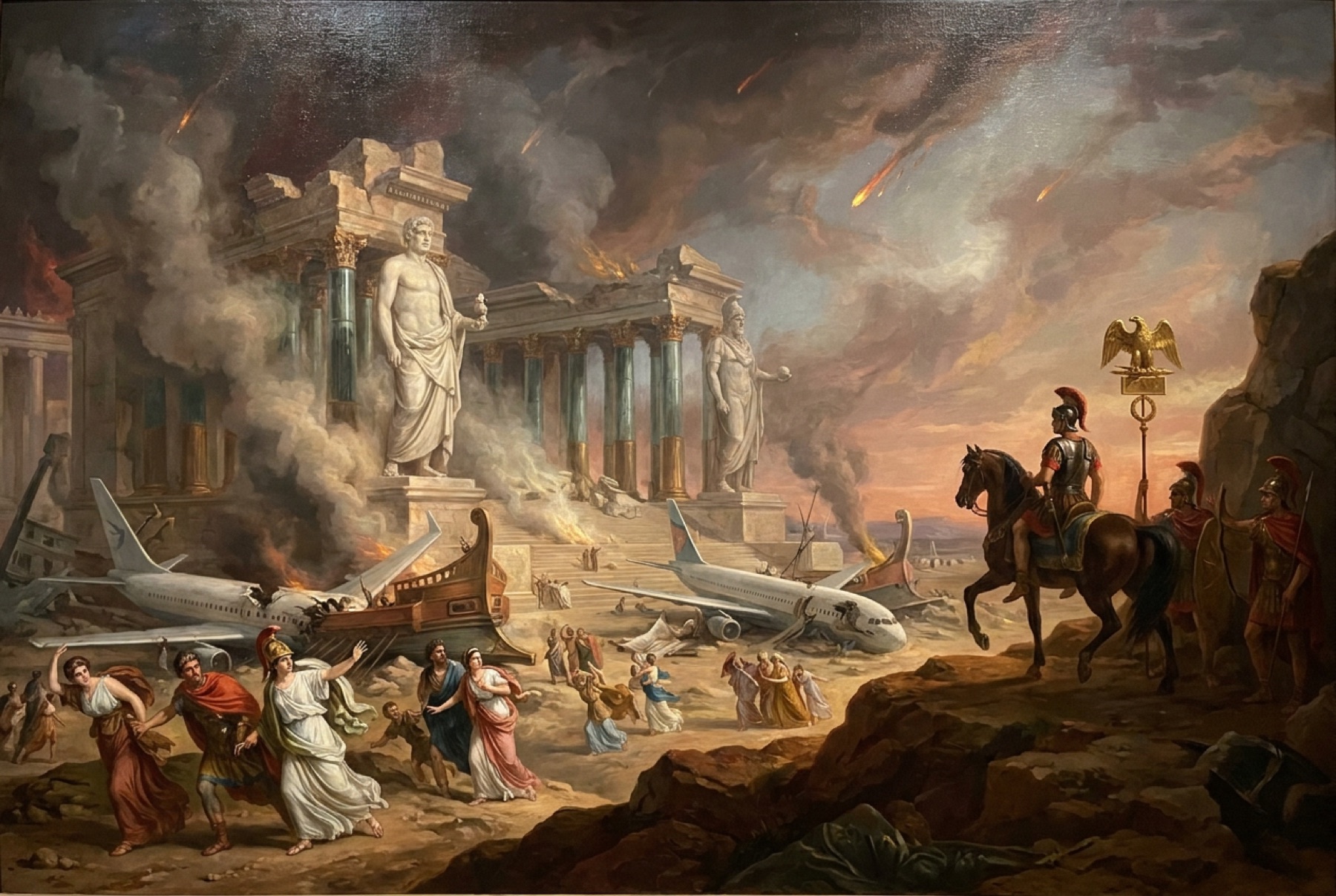
Tab. IAëroportus Riadi ardens. Tabula Actis Mundi more veterum picta (a machina).The Burning of Riyadh’s Airport. Painted for Acta Mundi in the classical manner (AI-generated).
Commentarii · De bello ArabicoDispatches · On the Arabian War
De aëroportu Riadi percusso et montanis Iemenensibus
On the Strike Against Riyadh Airport and the Yemeni Mountaineers
Missilibus e Iemenia coniectis tredecim homines Riadi perierunt; Caesar demonstrat immensas divitias et aëria arma nihil valere, si pedes in hostium terram ingredi recusat.
Thirteen dead in Riyadh after missile strikes from Yemen; Caesar observes that vast wealth and aerial weapons achieve nothing if infantry refuse to set foot in enemy territory.
Cur hoc legimusWhy we read this Quia regum sociorum arces ac portus desertorum incursione foede vulnerantur.Because the ports and citadels of allied kings are shamefully wounded by desert incursions.
Arabia Saudiana est regio late patens, campis arenosis ac maritimis finibus inclusa, cuius incolae, cum ingentibus vectigalibus ex oleo terrae redundent, omni copia rerum affluentiam et luxuriam maiorem quam disciplinae militaris curam habent. Ad meridiem spectat Iemenia, terra montuosa atque aspera, quam magna ex parte gens armata Schiitica, Huthi nomine, tenet. His diebus, ut acta diurna Neue Zürcher Zeitung nuntiant, bellum inter utrumque populum renovatum maiore clade in ipsam regni sedem redundavit.
Saudi Arabia is an expansive territory bounded by sandy plains and maritime borders, whose inhabitants, gorged on massive revenues from petroleum, display an abundance of goods and a taste for luxury far exceeding any regard for military discipline. Bordering it to the south lies Yemen, a rugged and mountainous land held in large part by an armed Shia tribal confederacy known as the Houthis. In recent days, as the daily Neue Zürcher Zeitung reports, renewed warfare between the two peoples has brought disaster directly into the kingdom's own seat of power.
Die Saturni ante diem IV Idus Octobres, missilibus ballisticis e Iemenia emissis, aëroportus regius Khalid, qui secundo loco post Geddam commeatu totius regni continetur, in ipso capite regni, Riado, percussus est. Tredecim homines interfecti sunt, amplius trecenti vulnerati, cum tecta aedificiorum conlaberentur et fumus cruorque loca publica complerent. Neque hoc unum fuit telum: nam die Iovis priore tres cives ceciderant, et die Solis insequente alio missili coniecto unus homo vitam amisit, dum Saudiani naves aërias Sanaam Iemeniae urbem petere iubent. Quibus rebus commoti magistratus aëroportum civilem claudere coacti sunt, dum barbari montani omnes gentes hortantur ut aëra Arabicum devitent.
On Saturday, the fourth day before the Ides of October, ballistic missiles launched from Yemen struck King Khalid Royal Airport—the kingdom's second hub of traffic after Jeddah—in the very heart of the capital of Riyadh. Thirteen people were killed and more than three hundred wounded as ceiling panels collapsed and public halls filled with smoke and blood. Nor was this a solitary strike: on the preceding Thursday three citizens had perished, and on the following Sunday another projectile took a life, even as the Saudis ordered airstrikes against Sanaa, the capital of Yemen. Shaken by these developments, the authorities were forced to shut down the civilian airport, while the mountain tribesmen publicly urged foreign nations to steer clear of Arabian airspace.
Caesar, cognita loci natura et genere pugnae, animadvertit quanta sit inter opes et virtutem dissimilitudo. Regnum enim Arabicum aerarium habet tam amplum ut vix ulli reges maiora stipendia aut plura tormenta aëria trans Oceanum emant; nihilominus aëroportus suos, unde commeatus et hospites pendent, contra repentina pericula munire non potest. Montani autem, quamquam annis continuis et a Saudiana classe et ab Americanorum missilibus petiti sunt, neque animos demiserunt neque tela conicere desierunt; et nuper angustias Bab al-Mandab ad tempus ceperant, ut terrorem classibus inicerent.
Caesar, having surveyed the terrain and the nature of the fighting, notes the vast gulf between wealth and valor. The Arabian kingdom commands a treasury so immense that scarcely any kings purchase heavier munitions or more advanced aerial batteries across the Ocean; nevertheless, it cannot protect its own terminals, on which its commerce and foreign visitors depend, against sudden strikes. The mountaineers, on the other hand, though subjected for years to continuous bombardments by the Saudi fleet and American missiles, have neither broken their resolve nor ceased their fires; indeed, they recently seized the straits of Bab al-Mandab for a time, striking terror into shipping lanes.
Interim Mahometus bin Salman regulus, cum intellegeret se terrestri acie in montes Iemeniae proprios milites mittere non audere, ad externas societates confugit. Foedus Meccanum cum Turcia et Pakistania nuper compositum excitavit, atque a Syria quoque auxilia flagitare conatus est. Sed haec omnia spe magis quam re geruntur: Turcis enim nondum senatusconsulto foedus ratum est, Pakistania militum sanguinem pro alieno regno profundere constanter recusat, et Donaldus Trump, praeses Americanorum, cum primo impetu se ultionem examinaturum pollicitus esset, a novo bello suscipiendo animum avertere videtur.
Meanwhile Crown Prince Mohammed bin Salman, aware that he dares not commit his own legions into the mountains of Yemen on foot, has turned to foreign alliances. He invoked the newly concluded Mecca Pact with Turkey and Pakistan, and even attempted to solicit auxiliary forces from Syria. But these maneuvers rest more on hope than on reality: the Turkish assembly has not yet ratified the treaty, Pakistan steadily refuses to spill its soldiers' blood on behalf of a foreign realm, and Donald Trump, the American president, after promising in an initial reaction to examine an expedition of reprisal, appears disinclined to take up a new war.
Dum haec ad portas fiunt, multitudo civium Riadi summa levitate atque inertia vivit. In tabernis urbis nobilissimis conveniunt, ridere pergunt et omnia celeriter transactum iri credunt; alii, dum muri ipsius aëroportus fumo obducuntur, certaminibus pediludii inter duas factiones intenti sunt et ludis magis quam bello favent. Idem enim evenit quod semper in opulentis rebus accidere solet: fere libenter homines id quod volunt credunt, et calamitatem longius distare putant quam re vera distat.
While these things unfold at the gates, the mass of Riyadh's citizenry carries on with the utmost levity and ease. They gather in the capital's fashionable cafes, smiling and trusting that the disturbance will swiftly blow over; others, while the airport walls are shrouded in smoke, watch soccer matches between rival factions and care far more for spectacles than for war. For the same outcome occurs that always attend opulent societies: men generally believe what they want to believe, and imagine disaster to be much farther off than it truly is.
Quae res non solum securitatem, sed ipsam dignitatem regis funditus labefactat. Mahometus enim conventum mercatorum et divitum totius orbis, quem Arabico more 'Davos in deserto' appellant, his ipsis diebus convocavit, ut auri flumina in novam regni gloriam confluerent. At legati et negotiatores, missilibus super capita volitantibus et stationibus conclusis, fidem ac fiduciam facile amittunt; mercatura enim stabilitatem petit, non fumum cadentium tectorum.
This state of affairs undermines not merely the kingdom's security, but the sovereign's very standing. Mohammed had summoned an assembly of international merchants and financiers, known colloquially as 'Davos in the desert,' for this very month, seeking to draw rivers of gold into his realm's newfound glory. But envoys and traders, with missiles flying overhead and transport terminals shut down, quickly lose faith and confidence; commerce demands stability, not the smoke of collapsing ceilings.
Caesar existimat nullum regnum sola pecunia aut aëriis missilibus ab aspero montano hoste defendi posse, si cives laborem militarem fugiunt et aliena auxilia mendicant. Frustra enim turres eriguntur et aurum hostibus ostenditur, ubi deest manus quae ferrum gerat: nam qui hostem procul tantum missilibus verberat, eum non vincit, sed ad maiorem audaciam provocat.
Caesar judges that no kingdom can be defended from a rugged mountain adversary by treasury or aerial missiles alone, if its citizens shun the toil of military service and beg for foreign auxiliaries. Towers are raised and gold is displayed to the enemy in vain when there is no hand to wield the iron: for he who merely bombards his foe from afar does not conquer him, but incites him to greater audacity.
Frustra enim turres eriguntur et aurum hostibus ostenditur, ubi deest manus quae ferrum gerat: nam qui hostem procul tantum missilibus verberat, eum non vincit, sed ad maiorem audaciam provocat.
Towers are raised and gold is displayed to the enemy in vain when there is no hand to wield the iron: for he who merely bombards his foe from afar does not conquer him, but incites him to greater audacity.
FONTES ANTIQVIANCIENT SOURCES
- Caes. BG 3.18.6fere libenter homines id quod volunt credunt
FONTES HODIERNITODAY’S SOURCES
- Neue Zürcher ZeitungChaostage im Königreich: Die Huthi greifen den Flughafen in Riad erneut an
Res ex fontibus; sententia Romani.Facts from the sources; the opinion is the Roman’s.
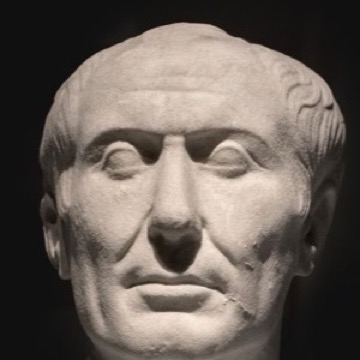
C. Iulius Caesar
Galliam subegit, Rubiconem transiit, rem publicam vicit. De se ipso in tertia persona scribit, breviter, celeriter, sine ornatu. Primus omnium instituit ut acta senatus et populi publicarentur.He conquered Gaul, crossed the Rubicon, and defeated the Republic. He writes about himself in the third person — briefly, swiftly, without ornament. He was the first to order that the daily acts of Senate and people be published.
Haec vox restituta est ex his libris:This voice is reconstructed from:
LEGE ETIAMREAD NEXT
- Galli Iterum Novis Rebus StudentThe Gauls Are Once Again Eager for RevolutionCaesar
- Indutiae verbis decretae, igne peractaeA Ceasefire Decreed in Words, Enacted in FireTacitus
- In ambitum et aerarii direptionemAgainst Electoral Bribery and the Pillage of the TreasuryCicero
- Unum Consulem Habent, Collegam NullumThey Have One Consul — and No ColleagueCicero